If you are a developer, Salla Partners is your entry point into one of the largest e-commerce ecosystems in the region. Before you write any code, it is worth understanding what you are actually joining, not just an API, but a business relationship between you, Salla, and the merchants who will depend on your app.This article covers what Salla Partners is, why it is worth your time, what kinds of apps exist on the platform, and how it all fits together as a system. Every later article assumes you understand the concepts introduced here.What Is Salla Partners?OverviewSalla Partners is the program, portal, and community through which developers build software for Salla merchants. It is three things working together:
A Program
Who can build on Salla, and under what terms.
A Portal
Where you register apps and manage credentials.
A Community
Developers and agencies supporting merchants.
The distinction that trips up most new Partners:A Salla merchant account and a Salla Partner account are not the same thing, and they do not share login credentials.The Merchant account runs a store, and the Partner account builds software for stores.You need the latter to do anything in this playbook.
Why This Exists
Salla could have built every merchant-facing capability itself, every shipping integration, every marketing tool, every AI feature.It did not for the same reason most platforms do not:merchant needs are too diverse and fast-moving for one team to serve well.Salla provides the merchant relationship and the technical surface area, you provide focused expertise on one problem merchants have.
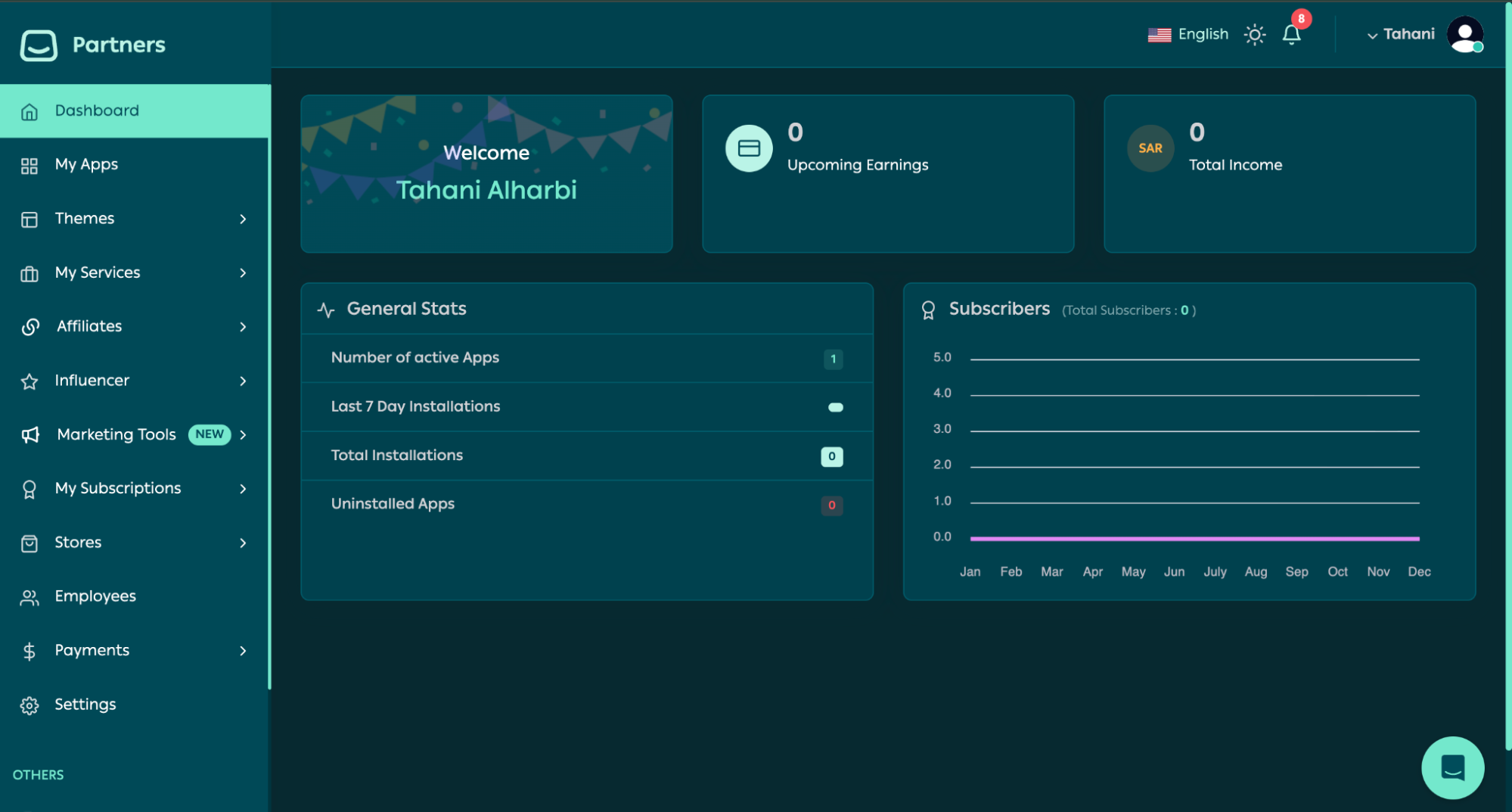
Figure 2.1 - The Salla Partners Portal dashboard after login
Salla recognizes four partner roles:They are not tiers, they are different relationships to the platform, and the one you register as determines what tools and dashboards you get.
Developer
Builds apps and technical products for merchants.
Affiliate
Refers merchants for commission.
Service Provider
Delivers hands-on services like setup and design.
Influencer
Builds awareness through audience reach.
This playbook is written entirely for Developers.If you are more interested in referrals or services without building software, look for Salla's Affiliate or Service Provider onboarding materials instead.
A Common Early Mistake
Registering as a Developer because it "sounds like the main one" when your actual business is closer to a Service Provider,e.g., you configure Salla stores for clients but do not build reusable software. Decide based on what you are building:A reusable app installed by many merchants (Developer) versus one-off client work (Service Provider), not on which label sounds more technical.
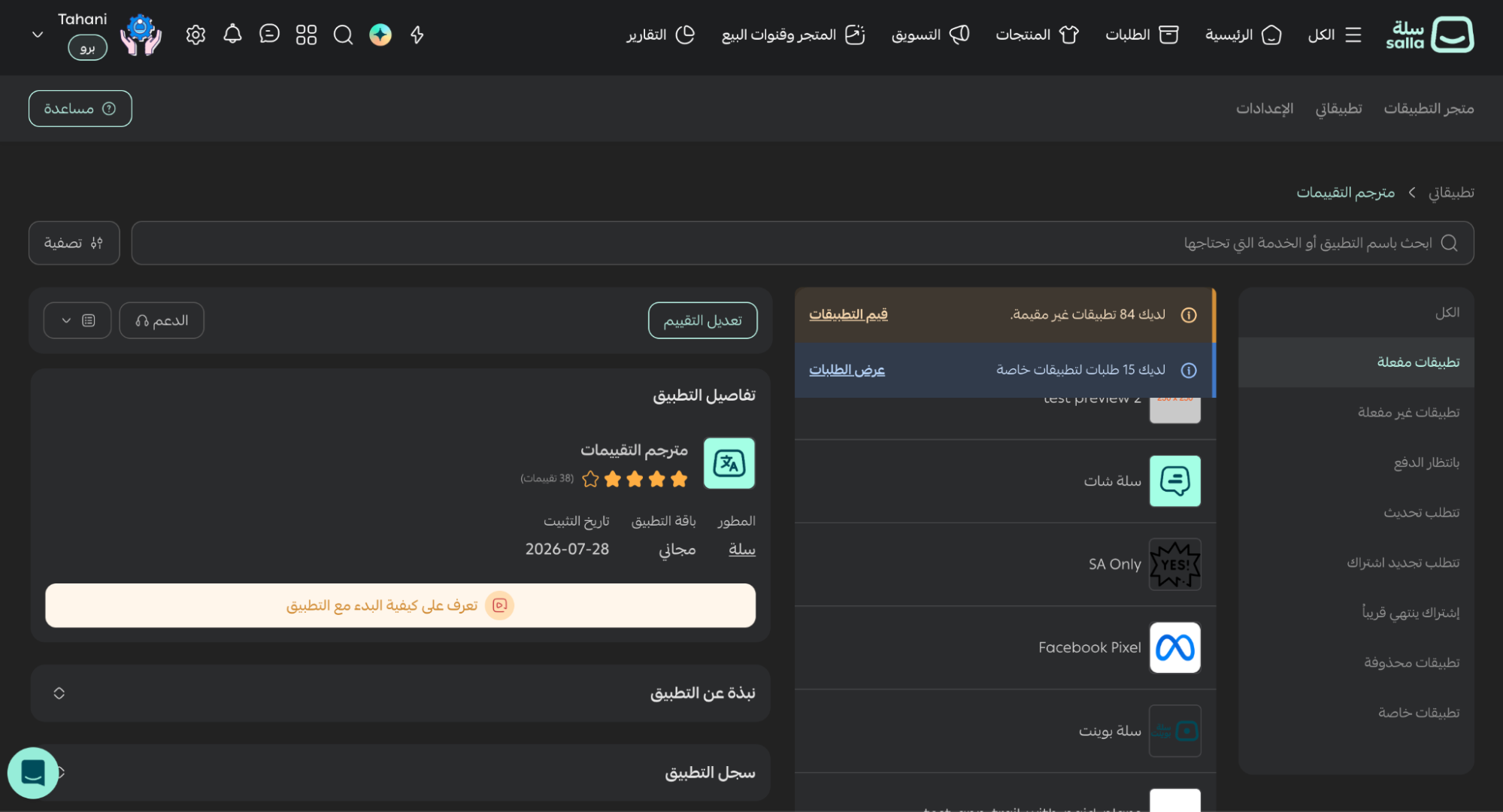
Three layers make up the Salla ecosystem, each with a distinct audience:Merchant Store: where your app's value is realized: a merchant using it to solve a real problem in daily operations.
Figure 2.2 - A merchant's installed-apps view in the Salla dashboard
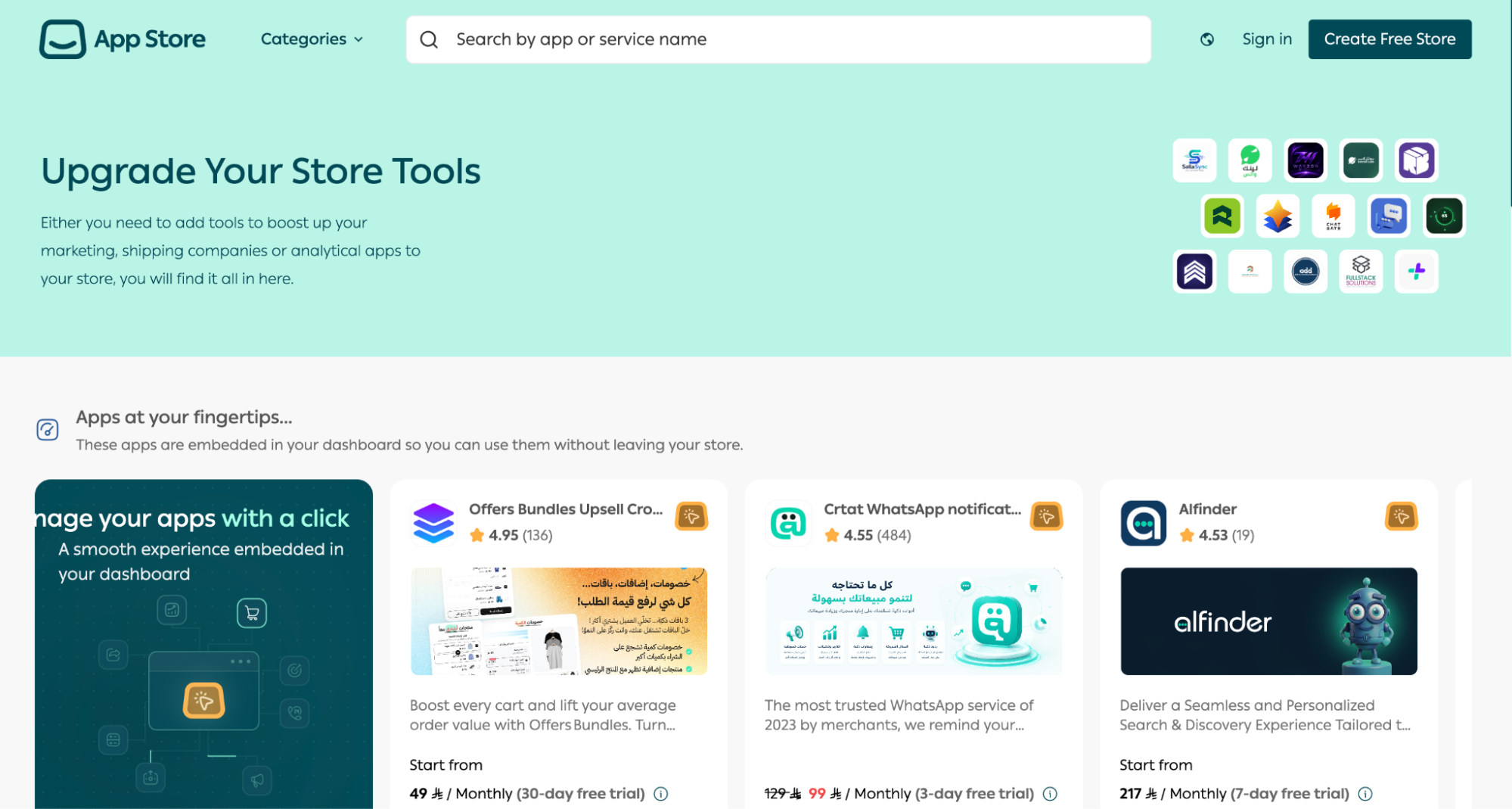
App Store: discovery: how a merchant who does not know you exist finds your app among competitors in the same category.
Figure 2.3 - The Salla App Store homepage, where merchants discover apps
Partners Portal: where you live day-to-day: building, testing, and iterating.
Figure 2.4 - The Partners Portal, where developers build, test, and iterate
Here is the part that is easy to underestimate, your app does not sit beside a merchant's business, it becomes part of it:
A shipping app failure means orders do not get fulfilled.
A marketing bug means a campaign goes out broken.
A hallucinating support AI means a customer gets false order information.
That dependency is exactly why Salla's review process (Publishing Your App) and the security standards in (Development Preparation) are not optional formality, they reflect genuine risk to a merchant's business.
Best Practices
1.
Register under the partner type that matches your actual business model, revisit if your model changes.
2.
Treat your demo store, not a live merchant store, as your default development environment from day one.
3.
Read the three-layer diagram as a system: a great app with a weak listing struggles as much as a mediocre app with a great one.
Common Mistakes
1.
Assuming a Partner account and a Merchant account are interchangeable, then getting stuck trying to access developer tools from a merchant login.
2.
Registering as a Developer by default without checking whether Service Provider fits better.
3.
Underestimating how tightly your app becomes coupled to a merchant's live operations.
The case for building on Salla comes down to a simple distribution question every developer eventually asks: how many potential customers will actually see my product, and how much work will it take to reach them?Salla is one of the largest e-commerce platforms in the region, with a large and actively growing base of live stores.For a developer, what matters is not the raw number, it is that a large population of merchants already share a common technical foundation: the same APIs, the same dashboard, the same install flow your app plugs directly into.Compare this to a standalone SaaS tool: you would need your own acquisition funnel, onboarding, and trust signals, and you would need to convince merchants to adopt a new system alongside whatever platform runs their store. Building on Salla removes most of that friction.
Making sense of data, analytics and reporting that turn raw store data into decisions merchants can act on.
Every App Store category maps to one of these five needs, that is not a coincidence.The strongest app ideas solve one of these needs precisely, for a specific merchant segment, rather than trying to be generally useful.
Building on Salla gives you real infrastructure you would otherwise have to build, secure, and maintain yourself:
1.
Merchant identity and authentication, Salla's OAuth flow gives you scoped access without building your own login system.
2.
Distribution, the App Store puts your app in front of merchants actively browsing a category because they recognize the problem.
3.
Monetization infrastructure, built-in billing and payouts, no separate payment processor or subscription system to build.
4.
Inherited trust, merchants are more willing to install a reviewed, listed app than an unfamiliar third-party tool.
Why This Matters for Your Roadmap
Because identity, distribution, billing, and baseline trust already exist, the overwhelming majority of your engineering time should go toward the specific merchant problem you are solving, not toward rebuilding infrastructure Salla already provides.
Best Practices
1.
Use Salla's OAuth and billing infrastructure by default; only build parallel systems with a specific, well-justified reason.
2.
Check any app idea against the five merchant-need categories before investing further.
3.
Remember that inherited trust from the App Store is contingent on your app actually performing well.
Common Mistakes
1.
Building broad, multi-purpose apps instead of one that solves a single merchant needs exceptionally well.
2.
Rebuilding infrastructure Salla already provides, out of habit from building standalone products.
3.
Treating a large merchant base as sufficient justification without validating your specific target segment.
Every app on Salla is classified along two independent dimensions: how it is distributed and what category it serves. Getting both right early saves real rework later.
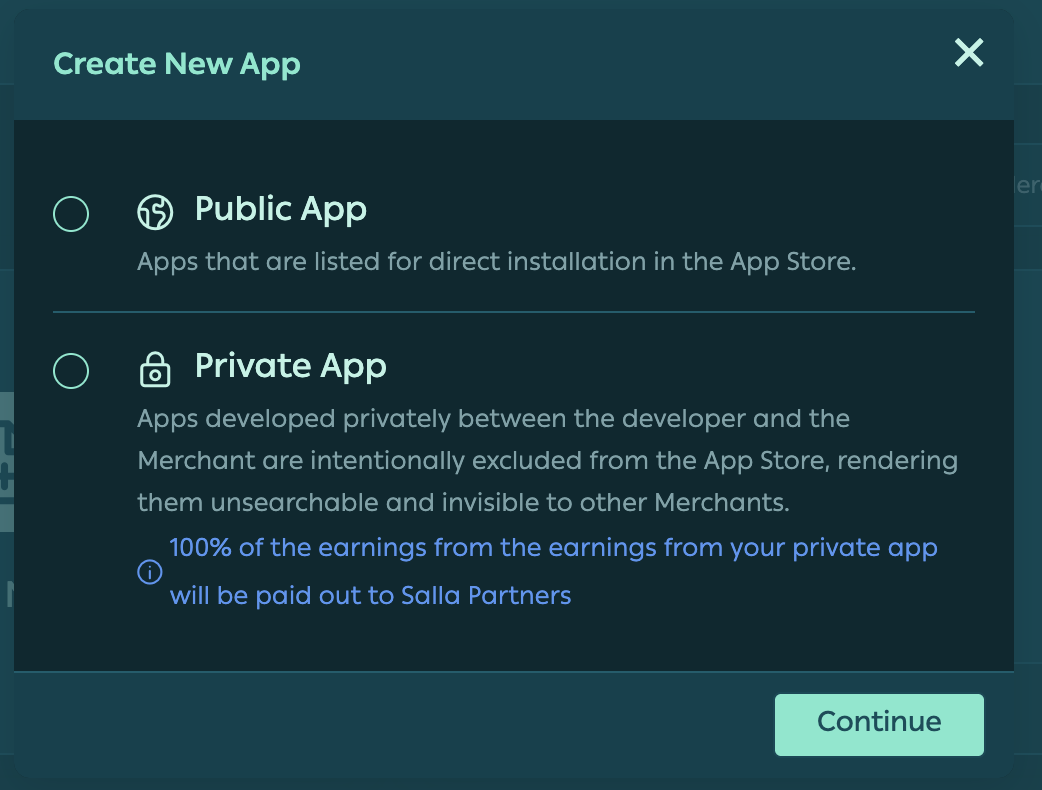
Listed in the App Store, discoverable by any merchant.
Private App
Built for one merchant or internal use, not listed.
This choice determines which parts of this playbook apply to you.Building a Public App? (Publishing Your App and Growing Your App),App Store optimization, go-to-market, retention across many merchants, are central.Building a Private App for one merchant? Focus almost entirely on (Development Preparation and Core Development), since you already know your one customer's needs.
A Mistake Worth Naming Directly
Building a Private App for one client, having it succeed, then wanting to make it Public, only to discover it was architected around one merchant's specific configuration.If there is any chance you will want to productize a custom build later, design your data model and configuration with multiple merchants in mind from the start.
Figure 2.5 - Choosing between a Public or Private app when creating a new app
The Salla App Store organizes apps into categories, and every Public App must fit into one: Shipping and Delivery, Drop Shipping, Fulfillment, Accounting & Finance, ERP Systems, Marketing, Analytics, Email, Geolocation, Site Optimization, AI-Driven Solutions, SMS, Chat, App Maker, Communication Apps, and Others.
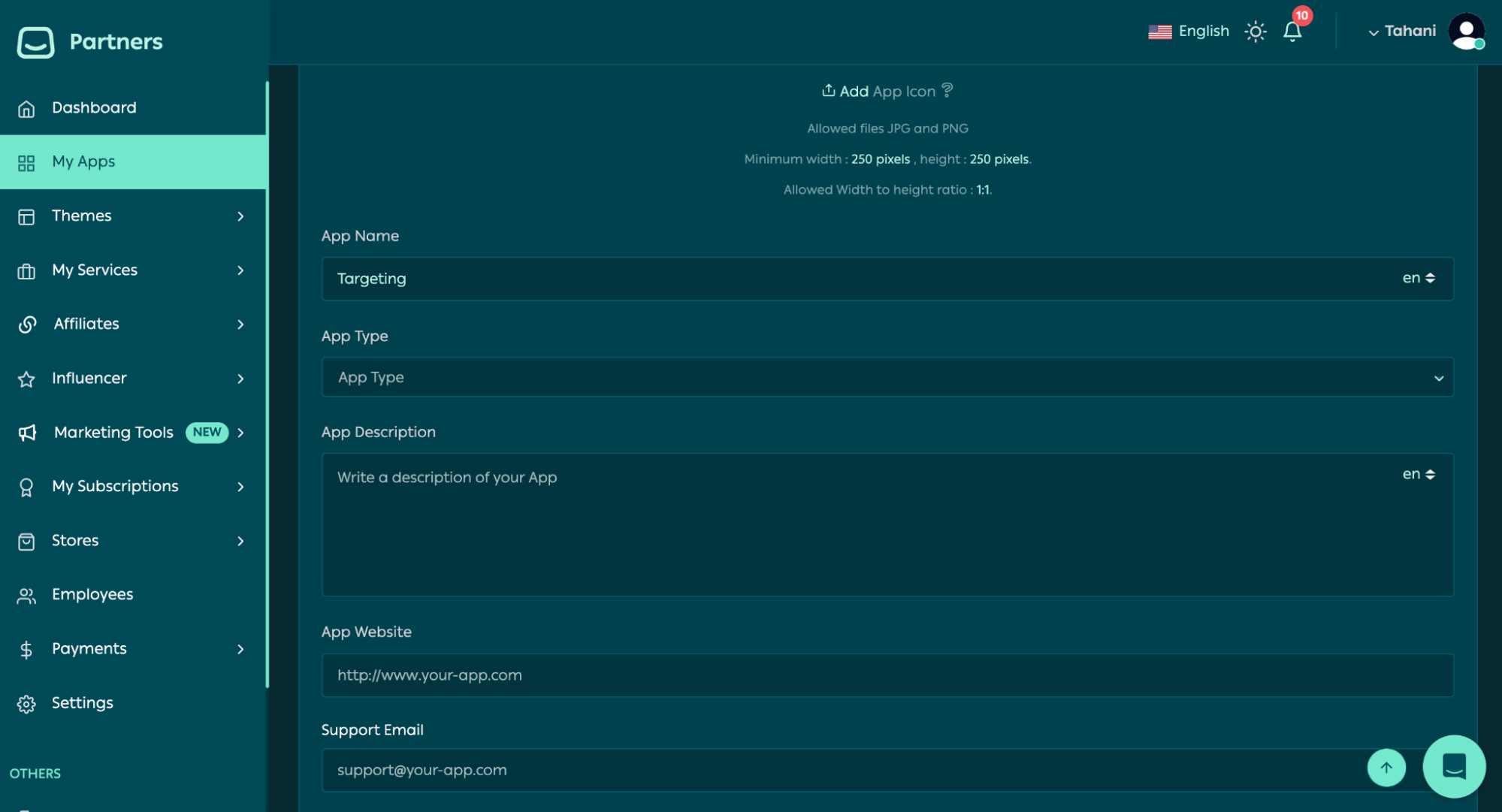
Figure 2.6 - Naming and setting the app type when creating a new app in the Partners Portal
Category Shapes Your Review Path
Category is not just a listing filter, it directly shapes your review path.Apps touching customer communication channels or passing merchant/customer data to third-party AI providers typically undergo closer data-handling review than, say, a Site Optimization app that only reads and displays existing store data.Working through a real example:Suppose you are building an app that uses AI to answer customer questions via WhatsApp, Is that AI-Driven Solutions, Communication Apps, or Chat? Honestly, all three, lead with whichever represents your primary value proposition.
AI that answers customer questions, leads with AI-Driven Solutions.
Manage all your WhatsApp communication in one place, leads with Communication Apps.
Best Practices
1.
Pick the single category matching your app's primary value proposition, not every category it technically touches.
2.
If unsure between two categories, check which one your closest competitors chose.
3.
Design Private Apps with reusable configuration in mind if there is any realistic chance of converting to Public later.
Common Mistakes
1.
Choosing "Others" to sidestep category-specific review, this usually just delays approval once reviewers reclassify the app.
2.
Architecting a Private App entirely around one merchant's setup, making it costly to generalize later.
3.
Choosing a category based on where competition looks weakest rather than where merchants will actually look first.